Tatiana Schlossberg Wikipedia, Biography, Age, Appointment, husband, Salary, Net Worth, Family
 adminDecember 31, 2025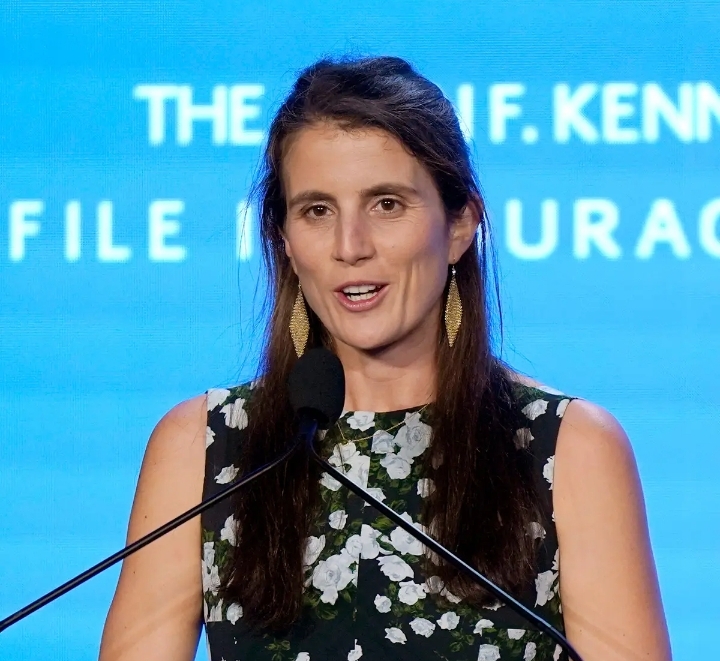
As a journalist, Schlossberg carved out a distinct professional path separate from her family’s political legacy. She worked as a science and climate reporter for The New York Times and contributed to several prominent publications, including The Atlantic, The Washington Post, and Vanity Fair. Her work often focused on the intersection of daily life and environmental impact, which she explored in her award-winning 2019 book, Inconspicuous Consumption: The Environmental Impact You Don’t Know You Have. The book earned her the Society of Environmental Journalists’ Rachel Carson Environment Book Award for its ability to make complex climate issues accessible to a general audience.
Tragically, Schlossberg passed away on December 30, 2025, at the age of 35. Her death followed a battle with acute myeloid leukemia (AML), a diagnosis she publicly revealed in a poignant November 2025 essay for The New Yorker titled “A Battle with My Blood.” In the essay, she shared that she was diagnosed in May 2024, shortly after the birth of her second child. She is survived by her husband, Dr. George Moran, whom she married in 2017, and their two young children, Edwin and Josephine, as well as her parents and siblings, Rose and Jack Schlossberg.
Tatiana Celia Kennedy Schlossberg was born on May 5, 1990, in New York City. She was the middle child of Caroline Kennedy, the former U.S. Ambassador to Japan and Australia, and Edwin Schlossberg, a prominent designer and artist. Her lineage placed her at the heart of American history; she was the granddaughter of the 35th U.S. President, John F. Kennedy, and First Lady Jacqueline Kennedy Onassis.
Table of Contents
ToggleA Legacy of Public Service
Growing up in the Kennedy family meant being raised with a strong sense of public service and historical awareness. Alongside her older sister, Rose, and younger brother, Jack, Tatiana was raised primarily on Manhattan’s Upper East Side. The siblings also spent significant time at their grandmother Jacqueline’s estate on Martha’s Vineyard, a location that would later feature prominently in Tatiana’s personal and professional life.
Multicultural Upbringing
Tatiana’s heritage was a blend of diverse cultural and religious traditions. Her father came from an Orthodox Jewish family of Ashkenazi descent from Ukraine, while her mother is Catholic with Irish, French, and English roots. While the children were raised Catholic, they also incorporated Jewish traditions like Hanukkah into their holiday celebrations, fostering a multifaceted worldview from a young age.
Educational Excellence
Tatiana Schlossberg’s academic journey was marked by a commitment to history and rigorous research, which later became the foundation of her journalism.
Undergraduate Years at Yale
She attended the all-girls Brearley School before graduating from the Trinity School in 2008. She then enrolled at Yale University, where she majored in History. During her time at Yale, she was deeply involved in student journalism, serving as the editor-in-chief of The Yale Herald. She was also a member of the senior society Mace and Chain and received the Charles A. Ryskamp Travel Grant for a research project exploring 19th-century communities on Martha’s Vineyard.
Master’s Degree at Oxford
After graduating from Yale in 2012, Tatiana sought to deepen her historical expertise. She moved to England to attend the University of Oxford, where she earned a Master of Studies (MSt) in American History. Her academic background in history provided her with the critical thinking skills and contextual depth necessary to tackle modern environmental crises.
Professional Journalism Career
Tatiana’s career began with a focus on local reporting before she transitioned into the specialized field of environmental science.
Early Reporting and The New York Times
She began her professional life as an intern at the Vineyard Gazette and later worked as a municipal reporter for The Record in Bergen County, New Jersey. In 2014, she secured a prestigious summer internship at The New York Times. Her talent was quickly recognized, and she was hired as a full-time reporter for the Metro section. One of her early notable stories involved the discovery of a dead bear cub in Central Park, showcasing her ability to handle unique and investigative news.
Transition to Climate Journalism
Schlossberg eventually moved to the The New York Times Science and Climate desk. There, she became a staff writer covering climate change, environmental policy, and the intersection of technology and the planet. Her colleagues often noted that she “wore her privilege lightly,” working tirelessly to research and verify every detail of her stories. She left the Times in 2017 to pursue freelance projects and focus on long-form writing.
Major Achievements and Literary Success
The crowning achievement of Tatiana Schlossberg’s career was the publication of her 2019 book, which solidified her status as a top-tier environmental writer.
Inconspicuous Consumption
Published by Grand Central Publishing, Inconspicuous Consumption: The Environmental Impact You Don’t Know You Have was a critical and commercial success. The book breaks down how everyday activities—such as streaming Netflix, eating a burger, or buying a pair of jeans—contribute to global environmental degradation.
-
Themes: The book explored four main areas: Food, Fashion, Fuel, and Technology.
Approach: Schlossberg used a “darkly humorous” and “knowledge-is-power” approach to make overwhelming environmental data feel manageable for the average reader.
-
Awards: In 2020, she was awarded the Society of Environmental Journalists’ Rachel Carson Environment Book Award.
Newsletter: News From a Changing Planet
Beyond her book, she maintained a dedicated following through her weekly newsletter, News From a Changing Planet. In this medium, she analyzed current environmental news, providing context and calls to action for her subscribers until her illness made it impossible to continue in 2024.
Personal Life and Marriage
Despite her public-facing career, Tatiana Schlossberg maintained a relatively private personal life, focusing on her family and close-knit circle of friends.
Marriage to George Moran
In September 2017, Tatiana married George Moran, a physician whom she had met when they were both undergraduates at Yale. The wedding took place at her family’s estate on Martha’s Vineyard. George Moran was a constant source of support throughout her career and her subsequent health battle, often using his medical expertise to navigate her treatment options.
Motherhood
Tatiana and George had two children:
-
Edwin: Born in 2022, named after her father.
-
Josephine: Born in May 2024.
Her daughter Josephine was born just days before Tatiana received the medical diagnosis that would change her life.
Health Battle and Terminal Diagnosis
In November 2025, Tatiana wrote a deeply personal and moving essay for The New Yorker titled “A Battle with My Blood.” In the essay, she revealed that she had been diagnosed with acute myeloid leukemia (AML) in May 2024.
The Inversion 3 Mutation
Her form of leukemia was particularly aggressive, involving a rare mutation known as “Inversion 3.” Despite undergoing chemotherapy, two stem cell transplants (including one from her sister, Rose), and participating in clinical trials for CAR-T cell therapy, the disease progressed. In her final months, she spoke candidly about her fear that her children would not remember her and her frustration with the “tragedy” she felt she was adding to her family’s history of loss.
Final Advocacy
Even in her final essay, Tatiana remained a journalist and advocate. she criticized policies that reduced funding for medical research, specifically targeting cuts to mRNA vaccine technology that could potentially aid in cancer treatments.
Net Worth and Legacy
While specific figures for her personal net worth were never publicly disclosed, Tatiana Schlossberg was part of the Kennedy family estate, which is estimated to be worth hundreds of millions of dollars. However, she was known for her modest lifestyle and her focus on her professional achievements rather than her inherited wealth.
Her true legacy lies in her contribution to environmental literacy. She transformed the way many people viewed their daily consumption habits, moving the needle from individual guilt toward systemic change.
Conclusion
Tatiana Schlossberg was more than just a member of a famous family; she was a brilliant mind and a dedicated protector of the planet. Her journey from the halls of Yale and Oxford to the front lines of climate journalism at The New York Times served as an inspiration to many. Though her life ended far too soon, the impact of her writing and her courageous final testimony will continue to influence environmental and medical advocacy for years to come.
FAQs about Tatiana Schlossberg
Who was Tatiana Schlossberg? She was an American environmental journalist and author, and the granddaughter of President John F. Kennedy.
When did Tatiana Schlossberg die? She died on December 30, 2025, at the age of 35.
What was the cause of her death? She passed away from acute myeloid leukemia (AML) with a rare Inversion 3 mutation.
What is Tatiana Schlossberg’s most famous book? Her most famous book is Inconspicuous Consumption: The Environmental Impact You Don’t Know You Have, published in 2019.
Who are Tatiana Schlossberg’s parents? Her parents are Caroline Kennedy and Edwin Schlossberg.
Did Tatiana Schlossberg have children? Yes, she had two children: a son named Edwin and a daughter named Josephine.
Where did Tatiana Schlossberg go to college? She earned her BA from Yale University and her master’s degree from the University of Oxford.
Who was Tatiana Schlossberg married to? She was married to Dr. George Moran, whom she met at Yale.
What awards did Tatiana Schlossberg win? She won the Society of Environmental Journalists’ Rachel Carson Environment Book Award in 2020.
What was Tatiana Schlossberg’s role at The New York Times? She was a staff writer and reporter covering climate change and the environment for the science section.
adminDecember 31, 2025